

 6 min
Chevrolet Camaro 2024: Final-Generation Specs, ZL1 Performance, and Racing Legacy
Reading Time: 6 minutes
2024 Chevrolet Camaro specs: The Final Models, Iconic Versions, and Racing Legacy
Few American cars combine performance, personality, and motorsport history quite like the Chevrolet Camaro. Since its introduction in 1966 as a 1967 model, the Camaro has offered drivers a compelling mix of bold styling, rear-wheel-drive handling, and engine choices ranging from practical six-cylinders to powerful V8s. It became a familiar sight on public roads, drag strips, and road-racing circuits—and a lasting rival to the Ford Mustang.
The Camaro’s sixth and final production generation ended with the 2024 model year. Chevrolet has not announced a 2026 production Camaro, so the latest confirmed specifications belong to the final 2024 models. For enthusiasts, those cars represent the closing chapter of a long-running nameplate—and a reminder of what made the Camaro special.
The Final Chevrolet Camaro: 2024 Model-Year Lineup
The 2024 Camaro range included several trim levels, with equipment and power varying by model. The main choices were the LS, LT, LT1, SS, and ZL1, alongside track-focused packages such as the 1LE. Chevrolet also offered special editions, including the Collector Edition, to mark the end of sixth-generation production.
The Camaro used a front-engine, rear-wheel-drive layout. Its low seating position, long hood, and compact cabin gave it the classic proportions of an American performance coupe. Buyers could also choose a convertible on selected trims.
The 2024 Camaro’s engine lineup included:
2.0-liter turbocharged four-cylinder: The entry-level engine paired everyday usability with lively turbocharged acceleration.
3.6-liter V6: A naturally aspirated engine offering smooth power delivery and a more traditional engine sound than the four-cylinder.
6.2-liter LT1 V8: Available in the LT1 and SS, this V8 delivered the deep exhaust note and strong acceleration that many Camaro enthusiasts seek.
Supercharged 6.2-liter LT4 V8: Reserved for the ZL1, this engine powered the most capable road-going Camaro of the final generation.
2024 Chevrolet Camaro specs of transmission choices varied by engine and trim. Depending on the configuration, buyers could select a manual gearbox or an automatic transmission. That choice mattered: an automatic could deliver fast, consistent shifts in traffic or during acceleration, while a manual made every gear change a more direct part of the driving experience.
The Most Powerful Final Camaro: ZL1
At the top of the final-generation lineup sat the Camaro ZL1. Its supercharged 6.2-liter V8 produced 650 horsepower and 650 lb-ft of torque in 2024. The engine’s supercharger forced more air into the cylinders, helping the V8 generate enormous power across a wide range of engine speeds.
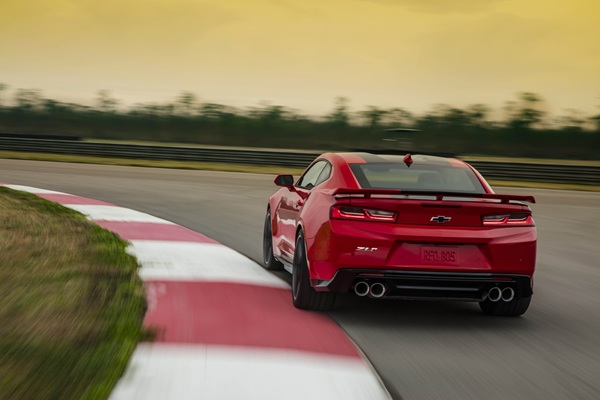
The ZL1’s performance came from more than its engine. Chevrolet developed it with a reinforced performance-focused setup that included upgraded suspension, strong brakes, performance tires, and aerodynamic details. The result was a Camaro designed for both fast road driving and demanding track sessions.
For drivers who wanted even more circuit-focused equipment, the available 1LE package added track-oriented features. Depending on configuration, these could include specialized suspension tuning, wider tires, aerodynamic components, and additional cooling. Those upgrades helped the car cope with repeated hard braking and cornering—conditions that can quickly expose the limits of an ordinary road setup.
A ZL1 is not simply a car for quick straight-line acceleration. Its power demands respect, particularly in poor weather or on cold tires. On a racetrack, a skilled driver can take advantage of its braking, grip, and chassis balance, but smooth inputs are essential. That combination of serious speed and driver involvement is a major part of the Camaro’s appeal.
Three Camaro generations stand out for their popularity, cultural impact, and importance to the model’s history.
First Generation: 1967–1969
The first-generation Camaro launched the nameplate and established its key design themes: a long hood, short rear deck, sporty proportions, and a broad range of powertrain choices. Chevrolet offered six-cylinder engines as well as several V8 options, allowing customers to choose a more affordable daily driver or a far more serious performance car.
The 1969 model is especially admired for its muscular styling and extensive performance options. The Z/28 became one of the generation’s most famous versions. It was developed with road racing in mind and helped connect the Camaro name to competition from the beginning.
The first-generation cars remain popular with collectors and restorers. Their straightforward mechanical layouts also made them attractive to racers and enthusiasts who wanted to customize engines, suspension, brakes, and bodywork.
Second Generation: 1970-1981
The second-generation Camaro arrived with a longer, lower profile and a distinctive fastback-inspired shape. It became one of the defining American performance-car designs of the 1970s.
Early models offered strong V8 performance, particularly in Z/28 form. Over time, changing emissions rules, fuel prices, and insurance pressures affected engine output across the industry. Even so, the Camaro retained its rear-wheel-drive character and continued to appeal to drivers who wanted a stylish American coupe.
The second generation also helped cement the Camaro’s place in popular culture. Its dramatic shape made it instantly recognizable, while the Z/28 continued to provide a performance identity for the range.
Fifth Generation: 2010–2015
The fifth-generation Camaro returned for the 2010 model year after a production gap. Its styling drew heavily on the first generation, but the engineering was thoroughly modern. The revival attracted long-time fans and introduced the Camaro to a new generation of buyers.
The range included V6 models and powerful V8 versions such as the SS. The ZL1 raised the performance stakes with a supercharged V8 and hardware designed for high-speed driving. The 1LE package brought additional track-focused upgrades to selected models.
The fifth generation proved that the Camaro could remain relevant in a changing market. Its blend of retro-inspired design, modern safety features, and substantial performance made it one of the most recognizable modern American coupes.
Camaro Racing History: From Trans-Am to NASCAR
The Camaro’s competition story began soon after its launch. The first-generation Z/28 became closely associated with the SCCA Trans-Am Series, where it faced rivals such as the Ford Mustang. The series tested more than straight-line speed: cars needed dependable power, controlled handling, effective braking, and the ability to perform consistently over a race distance.
Chevrolet teams and Camaro drivers achieved major success in Trans-Am competition, helping make the Z/28 a motorsport icon. Those race cars strengthened the connection between the road-going Camaro and the idea of a performance car developed to corner as well as accelerate.
The Camaro also became a natural choice for drag racing. Its V8 engines and rear-wheel-drive layout suited straight-line competition, while a large aftermarket supplied upgrades for engines, transmissions, suspension, and tires. Across amateur and professional drag racing, Camaros have appeared in a wide variety of forms—from street-based builds to dedicated competition machines.
In more recent decades, Camaro-based cars have competed in sports-car and touring-car racing. The model also represented Chevrolet in NASCAR, where teams used Camaro-bodied race cars in top-level stock-car competition. NASCAR vehicles are purpose-built race machines rather than modified production cars, but the Camaro identity connected Chevrolet’s racing program to its performance heritage.
These results matter because the Camaro’s motorsport reputation was earned across different kinds of competition. Road racing rewards balance and precision; drag racing demands traction and power; stock-car racing tests speed, durability, and team execution. The Camaro’s ability to be adapted to all three says a great deal about its versatility.
What Makes the Final Camaro Enjoyable to Drive?
The final Camaro generation was designed around a driver-focused layout. The low driving position and substantial hood give the car a distinctive feel, while rear-wheel drive lets the driver influence its handling with throttle and steering. Engine choice changes the experience considerably: the four-cylinder emphasizes accessible turbocharged torque, the V6 delivers smooth naturally aspirated power, and the V8 provides the traditional muscle-car soundtrack.
On ordinary roads, the Camaro can be an exciting weekend car or, depending on trim and personal needs, a daily driver. Its coupe shape and performance-focused seating can limit visibility and practicality compared with a sedan or crossover. Drivers should also consider fuel costs, tire prices, insurance, and the consequences of choosing a high-powered model for everyday use.
On a track, the Camaro rewards preparation and restraint. Checking tire pressures, monitoring temperatures, and using smooth braking and steering inputs can make a significant difference. High-performance versions are capable machines, but they are at their best in a controlled environment with suitable tires and a driver who understands their limits.
The Camaro’s Lasting Appeal
The final 2024 Chevrolet Camaro brought an end to the sixth generation, but not to the model’s influence. Its story runs from the original Z/28 and the Trans-Am battles to modern V8 performance and the ZL1’s track-ready capability. Across generations, the Camaro has offered enthusiasts a distinctive combination of power, style, and competition-inspired engineering.
For someone considering a used final-generation Camaro, the right choice depends on intended use. A four-cylinder or V6 model can deliver an engaging driving experience with less emphasis on fuel consumption and raw power. The SS is a compelling V8 choice for drivers who want traditional muscle-car character. The ZL1 is the ultimate expression of the final generation, but its performance and running costs call for careful consideration.
The Camaro’s greatest achievement may be how it makes technical performance feel personal. It is not just a list of horsepower figures or acceleration times. It is the sound of a V8 on a race weekend, the focus required to carry speed through a corner, and the thrill of driving a car with a genuine competition heritage. That passion is what keeps the Camaro alive in the imagination of enthusiasts—even after production has stopped.